Mapping Risk Assessment Techniques from Blackjack to Roulette in Progressive Prize Pool Environments
Sage Butler · Aug 26, 2026
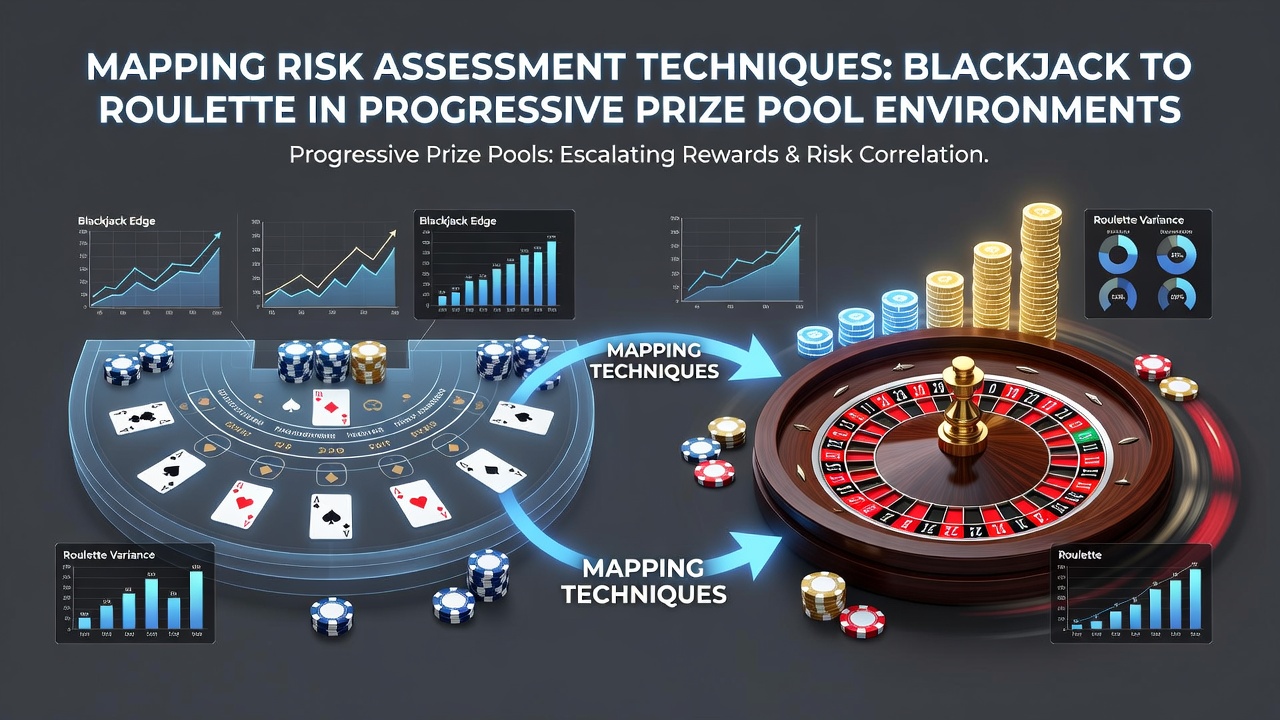
Mapping Risk Assessment Techniques from Blackjack to Roulette in Progressive Prize Pool Environments
Analysts track how core risk evaluation methods developed in blackjack translate across game boundaries into roulette formats that feature progressive prize pools, where jackpot accumulation alters payout volatility and decision thresholds. Data from multiple casino networks shows these adaptations rely on shared principles of expected value calculation and variance measurement, yet they require recalibration for roulette's fixed wheel structure and the added layer of growing prize funds.
Core Techniques in Blackjack Risk Evaluation
Blackjack risk frameworks center on probability tracking through card counting systems alongside bankroll allocation models that adjust bet sizes based on remaining deck composition. Researchers at academic institutions have documented how these methods quantify house edge shifts in real time, allowing players to identify periods of positive expectation while monitoring drawdown risks during extended sessions. Progressive elements enter when side bets feed into shared prize pools, forcing adjustments to standard deviation formulas that account for rare but high-value outcomes.
Transferring Methods to Roulette Structures
Observers note that roulette adaptations begin with reframing blackjack's sequential information advantage into static probability distributions across wheel sectors and betting combinations. Instead of tracking depleted cards, analysts apply similar variance tools to measure how progressive prize contributions inflate the effective return-to-player percentage on specific wagers such as straight-up numbers or column bets. Studies indicate the mapping process involves recalibrating Kelly criterion applications so that bet sizing reflects both the base game odds and the escalating jackpot value, which can exceed several million units in networked environments.
Progressive Prize Pool Dynamics and Their Impact
Progressive prize pools introduce covariance between individual game rounds and the accumulating jackpot, creating risk profiles that differ markedly from standalone table games. In August 2026, regulatory filings across North American and European markets revealed average pool growth rates of 12 to 18 percent month-over-month in multi-site roulette networks, prompting fresh examinations of tail-risk exposure. Those examining the data have found that techniques borrowed from blackjack, such as simulation-based stress testing, help quantify the probability of extreme drawdowns when players chase contributions toward the shared pool.
Industry reports from the Nevada Gaming Control Board highlight how operators integrate these mapped assessments into internal compliance systems, using them to set reserve requirements that cover both routine payouts and the larger progressive liabilities. Nevada Gaming Control Board filings show consistent use of Monte Carlo modeling originally refined in blackjack environments and now applied to roulette jackpot scenarios.
Practical Implementation Patterns Across Venues
Venues that operate both blackjack and roulette tables with linked progressive systems often deploy unified software platforms that import blackjack-derived risk metrics directly into roulette interfaces. Data indicates these platforms adjust alert thresholds for bet spread limits and session stop-loss triggers, scaling them according to current pool size rather than fixed table minimums. One documented case involved a European operator that reduced maximum wager caps on progressive roulette wheels by 22 percent after applying blackjack variance models to historical jackpot hit frequencies.
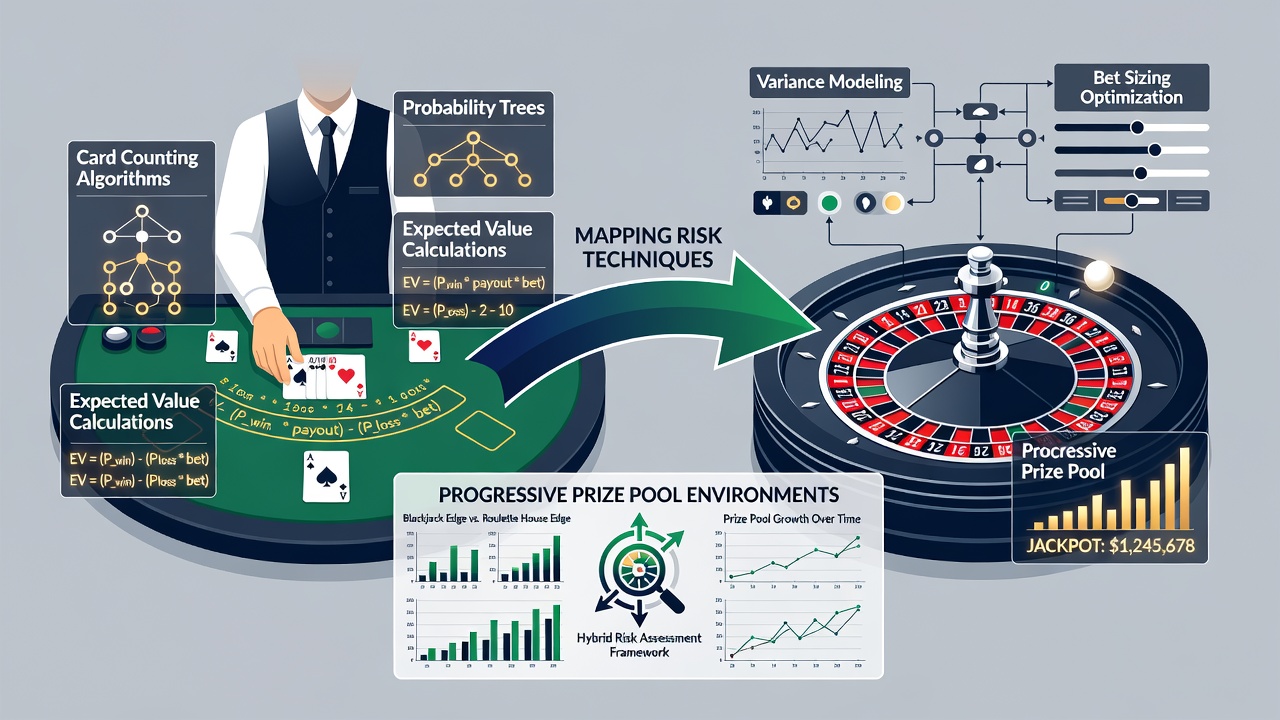
Academic papers from Canadian research centers further illustrate how correlation coefficients between successive spins change once progressive contributions exceed certain thresholds, requiring analysts to update covariance matrices that blackjack practitioners originally developed for multi-deck scenarios. These updates prevent overestimation of favorable conditions when the jackpot component dominates overall expected return.
Regulatory and Operational Considerations
Gaming associations in Australia have published guidelines that encourage operators to apply cross-game risk mapping during licensing reviews, particularly for titles that combine progressive mechanics with table games. Figures from these reports reveal that venues maintaining documented mapping procedures experience fewer compliance queries related to jackpot reserve adequacy. The approach also supports responsible gambling protocols by generating clearer player-facing disclosures about how prize pool growth influences individual session risk levels.
Conclusion
Mapping exercises continue to evolve as progressive prize pools expand across more jurisdictions, with data sets from 2026 providing additional calibration points for existing models. Organizations maintain these frameworks through ongoing simulation testing and periodic recalibration, ensuring that foundational blackjack techniques remain effective when applied to roulette environments where jackpot size directly modifies outcome distributions and capital exposure.